In the world of personal injury law, negligence is the failure to act with the level of care that a reasonable person would have used in the same situation. It is the legal foundation for most Utah personal injury claims, moving beyond simple accidents to identify who is legally responsible for bodily harm. Whether it involves a car accident on a busy street or a dangerous condition on someone's property, proving negligence is essential to recovering compensatory damages.
At Lance Bingham Law, we help Utah injury victims in Salt Lake City navigate the complex process of showing that another person's carelessness caused their physical injury. Under Utah law, specific elements must be met to hold a defendant liable for your losses. If you believe someone else is at fault for your injuries, call our Salt Lake City office today at (801) 869-6800 to discuss your personal injury claim during a free consultation with an experienced personal injury lawyer.
In legal terms, negligence is not merely an accident. It is a specific failure to follow a standard of care. When someone acts carelessly and hurts another person, the law considers them negligent. This concept is the heart of most personal injury cases in Salt Lake City.
Negligence happens when a person's conduct falls below the level of care expected by law. It is the opposite of being careful. To win a personal injury claim, you must show that the other person was not just unlucky, but that they failed to act responsibly.
The trier of fact (a judge or jury) uses the reasonable person test to decide fault. They ask: What would a sensible person do in this same situation? If a driver ignores speed limits or traffic laws, they are not acting like a reasonable person. This comparison helps determine if simple negligence occurred.
To have a successful case, you must prove four specific things. If even one pillar is missing, you cannot recover money. Lance Bingham Law focuses on gathering evidence for each step to protect your rights.
The first step is to show that the person had a duty of care. This is a legal obligation to avoid hurting others. For example, all drivers have a duty to watch out for others. In a medical liability case, a doctor has a duty to provide safe care within the provider-patient relationship.
A breach of duty occurs when someone fails to fulfill their responsibility. This could be a driver running a red light or a shop owner leaving icy surfaces on a walkway. When someone ignores a dangerous condition, they have breached their duty to keep others safe.
Causation connects the mistake directly to your injury. Lawyers look for the actual cause (the but-for cause) and the proximate cause. You must prove that the breach was the cause of your bodily harm. Without this link, the defendant might claim your pain came from an old injury instead of the car accident.
Finally, you must show that you suffered real harm. This is proven through medical records and accident reports. If there is no physical injury or financial loss, there is no negligence claim. Damages ensure the victim is compensated for their actual struggle and costs.
Utah uses a specific system to handle cases involving more than one at fault. This is called comparative fault. It is very important to understand how this affects the money you might receive.
Utah follows Utah Code §78B-5-818, which is a modified comparative negligence law. Unlike pure comparative negligence, where you can get money even if you are 99% at fault, Utah has a fault bar. This makes our fault-based system very strict for victims.
Under comparative negligence law, your reward is reduced by your fault. If a jury decides you were 20% at fault for a crash, you lose 20% of your money. If your total damages are $10,000, you would only get $8,000. Insurance companies always try to find reasons to blame you to lower their bill.
The bar in Utah is 50%. If you are found to be 50% or more responsible, you get nothing at all. This is a big difference from contributory negligence states, but it still requires a strong personal injury lawyer to keep your fault percentage as low as possible. We fight to make sure the trier of fact sees the truth of what happened.
To win, you need more than just your side of the story. You need a hierarchy of proof. We use several types of evidence to show exactly how a person or company was negligent.
Police reports are often the first piece of evidence. If the officer issued traffic citations, it is strong evidence of a breach of duty. These reports document the accident scene and any broken traffic laws immediately after the event.
Your medical records are the best way to prove bodily harm. They show the timeline of your medical care and the severity of your injuries. Without clear records, it is hard to link the accident to your current health problems.
Sometimes a case is complicated. We use expert testimony from accident reconstruction specialists to show how a crash happened. In a medical malpractice case, we might need a panel review to look at medical liability. These experts provide the deep knowledge needed for a successful personal injury claim.
Surveillance footage from nearby stores or dash cams can be the smoking gun. We also gather witness statements and witness testimony to support your story. This evidence helps prove that a dangerous condition, such as uneven flooring, existed and caused your slip-and-fall.
Not all mistakes are the same in the eyes of the law. Utah distinguishes between minor errors and extreme carelessness. Knowing the difference helps your personal injury lawyer determine the right legal strategy for your case.
Simple negligence is a basic failure to exercise reasonable care. It happens when someone makes a mistake that a reasonable person would have avoided. Examples include a driver briefly looking away from the road or a homeowner forgetting to salt icy surfaces. These are considered human errors, but the at-fault party is still responsible for your medical care.
Gross negligence is much more serious. It is a deliberate and reckless disregard for others' safety. This might involve a driver going double the speed limit in a school zone or a company ignoring vulnerable adults in their care despite knowing of a dangerous condition. It shows a total lack of concern for whether someone gets hurt.
In cases of extreme recklessness, a court may award punitive damages under Utah Code 78B-8-201. Unlike compensatory damages, which pay for your bills, punitive damages are meant to punish the wrongdoer. They serve as a warning to others that such behavior will not be tolerated in the community.
After an accident, you will likely deal with insurance companies. While they may seem helpful, their goal is to pay out as little as possible. They use many tactics to protect their own profits at the expense of your recovery.
Adjusters look for contributory negligence to lower the value of your claim. They may argue that your own actions were a proximate cause of the accident. For example, they might look at surveillance footage to see if you were walking too fast on uneven flooring to avoid paying the full cost of your slip and fall.
Insurance agents often ask for a recorded statement early on. They are looking for any detail they can use to prove comparative negligence. A simple "I'm sorry" or "I didn't see them" can be used as a cause of fact to shift blame onto you. It is always safer to have your personal injury lawyer handle these insurance negotiations.
Most cases end in a settlement, but some go to court. If the insurance company refuses to be fair, your case moves to the trier of fact. This involves a more formal inspection records review, and expert accident reconstruction. Having a strong personal injury claim prepared from the start makes a trial much more likely to succeed.
The goal of a negligence claim is to make the victim whole again. This means providing money to cover every way the injury changed your life. We divide these into two main groups.
Economic damages are the bills you can count. They cover your medical treatment, future surgeries, and the money you lost while away from work. We use your medical records and accident reports to add up every dollar you have spent because of the other person's mistake.
Non-economic damages are for things that don't have a price tag. This includes your physical pain, mental stress, and the loss of the ability to enjoy your hobbies. These are harder to calculate, but a personal injury lawyer knows how to put a value on your human suffering to ensure a fair settlement.
The four elements are duty of care, breach of duty, causation (actual and proximate cause), and damages (actual physical injury or loss).
Yes. Under Utah Code §78B-5-818, you can recover money as long as you are under 50% at fault. Your total money will be reduced by 30% for your fault.
It is a fault-based system in which you can recover damages only if your fault is less than the other party's fault. In Utah, the fault bar is 50%.
It is a hazard, like icy surfaces or uneven flooring, that a property owner should have fixed. If they knew about it and didn't act, they are negligent.
Medical malpractice is negligence by a healthcare provider. It often requires a panel review and expert testimony to prove the doctor breached the standard of care.
We use police reports, traffic signals data, and surveillance video. Accident reconstruction specialists can also help show how the other driver broke traffic laws.
Proving negligence is not something you should do alone. Lance Bingham Law is dedicated to protecting Utah injury victims. We handle the pre-lawsuit steps and the tough insurance negotiations so you can focus on your health. Whether it was a car accident, a motorcycle passenger injury, or a case involving vulnerable adults, we are here to help.
Call our Salt Lake City office at (801) 869-6800 to schedule a free consultation. We work on a contingency fee, so you pay us no fee unless we win your personal injury claim. Let our experienced personal injury attorneys fight for the financial compensation you deserve under Utah law.
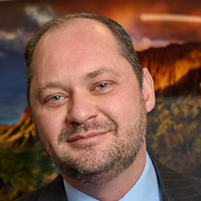
Dustin specializes in serious accident and injury cases in Utah and Idaho, practicing in State and Federal Courts. He's recognized as "Utah's Legal Elite," a "Mountain States Rising Star," and a member of The National Trial Lawyers Top 100. He holds an Avvo Superb Rating and is actively involved in legal associations, serving as a judge pro tempore for the Utah Supreme Court. A Utah native, Dustin earned his degrees from the University of Utah. He lives in Farmington with his wife and three children, enjoying family time, flying, and various outdoor activities.
Schedule Your
Free Consultation
