This page was written, edited, reviewed & approved by Dustin Lance and Cole Bingham following our comprehensive editorial guidelines. Dustin Lance, Partner Attorney, has handled many types of personal injury cases and is licensed in Utah and Idaho. Cole Bingham, Partner Attorney, focuses his practice on personal injury and wrongful death claims and is licensed in Utah. Before joining the firm, he spent years representing insurance companies, so he knows how insurers defend the claims our clients bring.
Key Takeaways:
After a forklift accident at work, get medical care, report the injury in writing, and protect the evidence before someone else controls it. Within hours, a supervisor may hand you paperwork to sign while the forklift goes back into service and the damaged pallets get restacked. You may also be wondering whether workers' compensation is your only option and whether reporting the injury could cost you your job.
Those worries are real, and they deserve straight answers. At Lance Bingham Utah Personal Injury Lawyers, we look past your employer for the outside companies whose negligence may have put you in harm's way. Whenever you are ready to talk through what happened, our team is available to listen and explain your options.



Your first few days shape both your workers' compensation benefits and any claim against an outside company. Take the following steps as soon as your condition allows:
Each step preserves proof that tends to vanish once the warehouse floor returns to normal.
The Labor Commission describes workers' compensation as a no-fault insurance system, so benefits do not depend on proving your employer did anything wrong. Medical benefits cover reasonable and necessary treatment, including mileage to appointments, while indemnity benefits replace only a portion of your average weekly wage. Neither category pays for pain and suffering.
Workers' compensation is also the exclusive remedy against your employer, meaning it replaces a negligence claim against the company that hired you. Under Section 34A-2-105, that protection extends to the employer's officers, agents, and employees. The rule shields your employer, but it does not shield every company connected to the forklift.
When someone other than your employer or its employees causes the injury, Section 34A-2-106 lets you claim workers' compensation and also pursue damages against that outside party. This separate case is a third-party claim, and it rests on proving negligence, which is a failure to use reasonable care. Several outside parties may share responsibility:
The right defendant depends on who controlled the equipment and the workspace.
Consider a rental company that delivers a forklift with a brake problem already noted in its own service log. If those brakes fail and the forklift strikes you, that rental company may face a claim while workers' compensation pays your medical expenses.
Lance Bingham Utah Personal Injury Lawyers works to identify every company that owned, rented, serviced, or operated the forklift. Call (801) 869-6800 to talk through your forklift injury with our team.
Most private-sector workplaces fall under the state's federally approved safety plan, enforced by the Utah Occupational Safety and Health Division. The state adopts federal Occupational Safety and Health Administration (OSHA) standards by reference, including detailed forklift rules.
Under OSHA's forklift operator training requirements, employers must train, evaluate, and certify each operator. Evaluations must happen at least once every 3 years, and refresher training is required after an accident, a near miss, or unsafe operation.
Lance Bingham Utah Personal Injury Lawyers requests these certification files early in a forklift case. A missing or outdated record can show that an untrained driver was put behind the controls.
OSHA's powered industrial truck standard requires each forklift to be examined before it is placed in service, at least daily, and after each shift when it runs around the clock. Report and correct defects immediately, and do not place a truck with a safety problem in service.
Inspection checklists, work orders, and repair invoices can reveal whether a known brake, steering, or hydraulic problem was ignored. Those same documents may point to a rental or maintenance company that shares responsibility.
In a third-party claim, fault is divided among the people and companies involved. Under Section 78B-5-818, you can recover from defendants whose fault, combined with the fault of anyone immune from suit and certain nonparties, exceeds your own. A jury may assign fault to an immune employer without making that employer liable, and each defendant pays only its share.
Before you proceed against a third party, Section 34A-2-106(3) requires written notice to the workers' compensation carrier and anyone else obligated to pay benefits, giving them a chance to join the case. You must also notify them of any known attempt to attribute fault to your employer, whether through a settlement or a lawsuit.
We send these notices at the start of a third-party case, so attention stays on the outside company's conduct.
If you recover from a third party, Section 34A-2-106(5) divides the reasonable costs of the case, including attorney fees, proportionately among the parties. The carrier is then reimbursed for benefits it paid, minus its share of those costs and, in some cases, a reduction tied to fault assigned to your employer. The balance goes to you and offsets future benefits the carrier would otherwise owe.
A third-party claim can also seek losses that workers' compensation does not pay, including pain and suffering and other non-economic damages. That difference matters after a forklift injury that changes how you work and live.
A statute of limitations is the deadline to file a lawsuit. Many negligence claims fall under the 4-year catch-all period in Section 78B-2-307, which covers relief not otherwise provided for by law. Product liability claims carry a shorter deadline: Section 78B-6-706 allows 2 years from when you discovered, or should have discovered, both the harm and its cause.
Fear of losing your job should not stop you from reporting a forklift injury. Under Section 34A-2-114, an employer may not suspend, fire, discipline, threaten, or otherwise retaliate against you solely because you claim workers' compensation benefits. The Division of Industrial Accidents may fine an employer up to $5,000 for each violation.
Usually not, because workers' compensation is the exclusive remedy against your employer. We look instead for outside companies whose negligence contributed.
That coworker generally shares your employer's protection from claims. We still examine whether an outside company owned, serviced, or supplied the forklift.
If the agency secured workers' compensation coverage, both the agency and the client company share that protection. We then look beyond both businesses.
Often, yes, because workers' compensation is a no-fault system. Fault matters more in a third-party claim, where we challenge efforts to blame you.
We recommend notifying your doctor and employer right away. The 180-day notice period runs from the day the injury occurs, not the day symptoms worsen.
No, indemnity benefits cover only part of your average weekly wage. Where a third-party claim exists, we can seek the remaining lost income.


The training certification and inspection sheet for that forklift sit in someone else's files, and no one is rushing to hand them over. Lance Bingham Utah Personal Injury Lawyers is a non-advertising firm, so attorneys, not claim handlers, work on and negotiate your claim.
Attorneys Dustin Lance and Cole Bingham bring nearly 40 years of combined experience and travel to clients anywhere in Utah. We work to identify each company connected to your forklift accident at work and explain how an outside claim fits alongside your workers' compensation benefits.
Our attorneys handle cases on a contingency fee basis, and our team is available 24/7. Call (801) 869-6800 or reach us through our contact page to schedule your free case evaluation.
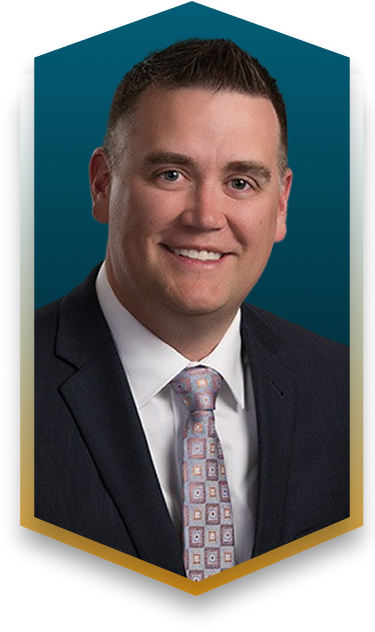
Cole Bingham is a co-founder and partner at Lance Bingham, where he represents injured Utahns and their families in cases involving vehicle crashes, bicycle accidents, dog bites, and wrongful death. Earlier in his career, Cole spent years representing insurance companies, and he now applies that insight to challenge insurers' tactics on behalf of injured clients. A graduate of the S.J. Quinney College of Law with High Honors, Cole has been named a Mountain States Super Lawyer and one of Utah Business's Legal Elite.
Lance Bingham Utah Personal Injury Lawyers
250 E 200 S #1050, Salt Lake City, UT 84111
Phone: (801) 383-2922

Schedule Your
Free Consultation