This page was written, edited, reviewed & approved by Dustin Lance and Cole Bingham following our comprehensive editorial guidelines. Dustin Lance, Partner Attorney, has handled many types of personal injury cases and is licensed in Utah and Idaho. Cole Bingham, Partner Attorney, focuses his practice on personal injury and wrongful death claims and is licensed in Utah. Before joining the firm, he spent years representing insurance companies, so he knows how insurers defend the claims our clients bring.
Key Takeaways:
When the other driver doesn’t have insurance, your own auto policy usually becomes the main source of payment for your injuries. That answer rarely feels like enough when an adjuster says the driver who hit you on a Utah road has no policy, the medical bills keep arriving, and your car sits in a repair shop. You did nothing wrong, yet your own insurer may now question every dollar you request.
State law gives you several paths forward, each with rules insurers know well. At Lance Bingham Utah Personal Injury Lawyers, we press insurers to honor the uninsured motorist coverage you paid for, and we look for every other source of recovery. Call our team to talk through your policy, your injuries, and the options that fit your situation.

Most people expect the at-fault driver’s insurer to pay, so learning that no policy exists can feel like a dead end. It usually is not. Your policy has layers of protection that work together.
The first layer is personal injury protection (PIP), part of the state’s no-fault system. Under the state’s personal injury protection statute, PIP pays at least $3,000 per person for necessary medical expenses, plus limited benefits for lost income and household services. For more background, read about how the state’s no-fault insurance system works.
Beyond PIP, uninsured motorist (UM) coverage covers injury losses the uninsured driver would otherwise owe. The Insurance Research Council estimated that 6.2% of Utah drivers were uninsured in 2023, compared with 15.4% nationally, according to the Insurance Information Institute.
Many people assume uninsured means the other driver had no policy at all. The state’s uninsured motorist statute defines the term more broadly, and that broader definition often opens doors insurers would rather keep closed. A vehicle can qualify as uninsured in the following situations:
Each category gives us grounds to look past a first denial letter.
For the shortfall category, the state’s minimum liability statute requires policies issued or renewed on or after January 1, 2025, to carry at least $30,000 per person and $65,000 per accident for bodily injury.
A driver who flees the scene still leaves you with a potential claim. The harder cases involve phantom vehicles that forced you off the road without ever touching your car.
Under the state’s uninsured motorist law, an unidentified vehicle that left the scene counts as uninsured when its driver caused the crash. If that vehicle never made contact, you need clear and convincing evidence of it beyond your own testimony.
Witness statements, dashcam footage, and nearby business video can supply that proof, but those sources disappear quickly. We act fast to preserve them, just as we do with other hit-and-run accident claims.
Uninsured motorist coverage protects you when someone else fails to buy insurance. Under the uninsured motorist statute, it covers bodily injury damages you are legally entitled to recover from the uninsured driver. Covered people include you, your dependent minor children, relatives living in your household, and anyone riding in your insured vehicle.
Your UM limits generally match your liability limits unless the named insured signed a form choosing lower limits. Rejecting UM coverage entirely requires an express written form the insurer provides, under the same coverage statute. We request those signed forms early because they show how much coverage is available.
Fault still matters in a UM claim, because your insurer pays only for damages you are legally entitled to recover. Under the state’s comparative fault statute, you can recover only from parties whose combined fault exceeds yours.
Sometimes, the other driver carries a policy that falls far short of your losses. The state’s underinsured motorist statute treats a vehicle as underinsured when its liability coverage cannot fully compensate the injured person. Like UM coverage, underinsured motorist (UIM) limits generally match your liability limits unless the named insured signed a form choosing less.
Underinsured claims follow their own process, and our guide walks you through filing claims against underinsured drivers.
If an adjuster has already told you the other driver has no coverage, do not accept that as the final word. Call Lance Bingham at (801) 869-6800, and we will review your policy and your options.
The days after a crash with an uninsured driver in Utah shape the strength of the claim that follows. Insurers look for gaps in the record, so we encourage clients to take the following steps:
Taken together, these steps give your insurer fewer reasons to question your claim.
Filing a UM claim means asking your own insurer to pay, and that insurer may not treat you like a valued customer. Adjusters may dispute fault, blame your injuries on something else, or offer far less than your documented losses.
Under the uninsured motorist statute, you may resolve the claim through binding arbitration or litigation. Once you choose litigation, you cannot switch to binding arbitration without the insurer’s written consent. An action on the UM policy must begin within 4 years after the inception of the loss.
At Lance Bingham, we weigh arbitration against litigation for each client and push back when an insurer delays or undervalues a claim. When an insurer’s conduct crosses the line, we also evaluate insurance bad faith claims.
You can pursue a claim against the uninsured driver, but a judgment is only as useful as that person’s ability to pay it. Many uninsured drivers have limited assets, so we also look for other responsible parties, such as an employer or the vehicle’s owner.
The state’s no-fault threshold statute limits when you can claim general damages such as pain and suffering. The injury must involve dismemberment, permanent disability or impairment based on objective findings, permanent disfigurement, a bone fracture, or medical expenses over $3,000, or the crash must have caused a death.
Separate deadlines can apply to a claim against the driver, including the state’s 4-year limitation period for relief not otherwise provided for by law. We confirm which deadline applies at the start of every case.
It can, but the uninsured motorist statute requires clear and convincing evidence of the other vehicle beyond your own testimony. We gather witness statements and video for that showing.
If that insurer disputes coverage for more than 60 days, the uninsured motorist statute treats the vehicle as uninsured. We track those dates and press both insurers.
Yes, the uninsured motorist statute covers people occupying a vehicle referenced in your policy. We review each passenger’s options separately.
Possibly, through PIP, health insurance, or a claim against the driver or other responsible parties. We also check whether the signed rejection met the statute’s written-form requirements.
Under the uninsured motorist statute, a vehicle with limits below the state minimum counts as uninsured for the shortfall. We pursue that gap through your UM coverage.
Under the uninsured motorist statute, you must file a claim under your UM policy within 4 years of the loss. We recommend acting sooner while evidence is fresh.
If the driver who hit you had no insurance, the declarations page in your glove box may hold more protection than you realize. Reading it closely is where our work begins.
Our attorneys, Dustin Lance and Cole Bingham, handle cases personally and will travel to you anywhere in the state. We request the signed coverage forms, compare every available policy, and hold insurers to the terms of the coverage you bought.
We handle injury claims on a contingency fee basis, so you can focus on treatment while we deal with the adjusters. Our phone line is available 24/7.
Call Lance Bingham Utah Personal Injury Lawyers at (801) 869-6800 or use our contact page for a free case evaluation if the other driver doesn’t have insurance and you were hurt in Utah.
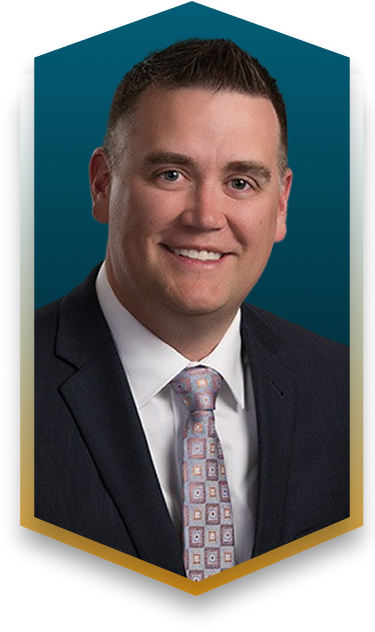
Cole Bingham is a co-founder and partner at Lance Bingham, where he represents injured Utahns and their families in cases involving vehicle crashes, bicycle accidents, dog bites, and wrongful death. Earlier in his career, Cole spent years representing insurance companies, and he now applies that insight to challenge insurers' tactics on behalf of injured clients. A graduate of the S.J. Quinney College of Law with High Honors, Cole has been named a Mountain States Super Lawyer and one of Utah Business's Legal Elite.
Lance Bingham Utah Personal Injury Lawyers
250 E 200 S #1050, Salt Lake City, UT 84111
Phone: (801) 869-6800

Schedule Your
Free Consultation