This page was written, edited, reviewed & approved by Dustin Lance and Cole Bingham following our comprehensive editorial guidelines. Dustin Lance, Partner Attorney, has handled many types of personal injury cases and is licensed in Utah and Idaho. Cole Bingham, Partner Attorney, focuses his practice on personal injury and wrongful death claims and is licensed in Utah. Before joining the firm, he spent years representing insurance companies, so he knows how insurers defend the claims our clients bring.
Yes, you can file a car accident claim without a police report, but it is significantly more difficult.
A police report is one of the most important pieces of documentation in any car accident case because it gives the insurance company an official, unbiased account of what happened. Without it, you are left relying on other evidence to prove your claim, and insurance adjusters will use every opportunity to question the details of your accident.
Lance Bingham helps car accident victims in Salt Lake City and across Utah protect their legal rights and recover fair compensation, even when no police report was filed. Our experienced car accident attorneys know how to build strong claims using photos, witness statements, medical records, and other evidence that supports your case. We offer a free case review with no upfront costs.
Call us today at 801-477-8346.
Utah law does not require you to call the police for every minor accident. If the crash involves only minor damage, no injuries, and both drivers agree on what happened, you may not be legally required to file an official report.
In some cases, such as accidents on private property like a parking lot, a police officer may not even respond. However, just because reporting is not required does not mean skipping it is a good idea.
A police report creates an official record documenting the crash scene, the vehicles involved, statements from both drivers, and the officer's observations of fault. Insurance companies rely heavily on this document when processing claims.
Without it, the at-fault driver can change their story, and the insurance company has far more room to dispute your version of events and deny or reduce your claim.
If no police report was filed, you will need to build your claim using other forms of physical evidence. The stronger and more complete your own documentation, the better your chances of recovering fair compensation.
Photos and videos taken at the accident scene are some of the most powerful pieces of evidence you can have. Capture the damage to all vehicles involved, the positions of the cars, road conditions, skid marks, traffic signals, and any visible injuries. Surveillance footage from nearby security cameras can also provide critical visual evidence that neither driver can dispute.
Eyewitness testimony from people who saw the crash can carry significant weight in the claims process. Collect names, phone numbers, and written or recorded statements from any witnesses at the scene before they leave.
Medical records that connect your injuries directly to the crash are essential in any car accident claim, but especially when no police report exists. Seek medical attention immediately after the accident and keep records of every treatment, diagnosis, and medical expense related to your injuries.
Gather the other driver's insurance information, license plate number, and driver's license details at the scene. Document all vehicle damage with photos and get a written repair estimate as soon as possible. This additional documentation creates a paper trail that supports your claim even without an official crash report.
Insurance companies can and do process claims without police reports in certain situations, but the process is harder, and the risk of a dispute is much higher.
Insurance providers have their own internal investigation processes and do not always require a police report to approve a claim.
Claims without a police report may still be approved in situations like these:
The absence of a police report gives insurance adjusters more room to question your claim and look for reasons to deny or reduce your payout.
Some of the common challenges you may face are:
When no police report exists, the insurance company will conduct its own investigation to determine what happened. This typically involves interviewing both drivers, reviewing any photos or videos, requesting medical records, inspecting vehicle damage, and contacting witnesses.


Disputed fault is one of the most serious problems you can face when filing a car accident claim without a police report. When the other driver tells a different story, and there is no official report to establish what really happened, proving liability falls entirely on you.
To prove the other driver was at fault, you need to present enough evidence to show it is more likely than not that their negligence caused the crash. This means gathering everything you have, from photos and videos to witness statements and medical records, and building a clear picture of what happened and why the other driver is responsible.
When there is no crash report to rely on, the following types of evidence become critical to establishing who caused the accident:
An independent witness with no relationship to either driver carries enormous credibility with insurance companies and juries. Their account is seen as unbiased, making it much harder for the at-fault driver to dispute what happened. If anyone witnessed the crash, get their contact information immediately.
Under Utah Code § 41-6a-401, drivers involved in a car accident are required to immediately report the crash to law enforcement when the accident results in injury, death, or significant property damage. If a police officer does not come to the scene, the driver may be required to file a report directly with the Utah Department of Public Safety.
Utah drivers involved in a reportable accident must stop immediately at the scene, provide their name, address, driver's license, and insurance information to the other driver, and render reasonable assistance to anyone who is injured.
Failing to stop or exchange information after an accident that results in injury or significant property damage is a criminal offense under Utah state law.
Failing to report an accident that meets Utah's reporting requirements can result in criminal charges, fines, and a suspended driver's license. It can also seriously damage your legal claim because it creates the appearance that you were hiding something.
Yes. The absence of a police report does not prevent you from filing a personal injury claim or a personal injury lawsuit in Utah. It does make the process harder, but with the right evidence and an experienced attorney on your side, you can still build a strong case.


Utah follows a modified comparative fault rule under Utah Code § 78B-5-818. You can still recover compensation after a car accident even if you were partially at fault, as long as your share of fault is less than 50%.
However, your total compensation is reduced by your fault percentage. Without a police report, insurance companies have more room to argue that you were largely responsible for the crash.
If you were in a car accident and no police report was filed, take these steps right away to protect your claim and your legal rights:
Filing a car accident claim without a police report is difficult, but it is not impossible. Lance Bingham has helped many accident victims in Utah recover fair compensation even in challenging situations.
Here is what we do for every client:
Yes. Insurance companies can process claims without a police report. Still, you will need strong supporting evidence, including photos, witness statements, and medical records, to back up your account of what happened.
Under Utah law, most personal injury claims must be filed within four years of the accident date. However, you should act promptly to preserve evidence and protect your legal rights.
No. You should speak with a car accident attorney before giving any recorded statement to any insurance company.


If you were in a car accident in Utah and no police report was filed, do not assume your claim is lost. Lance Bingham is ready to review your case, help you understand your legal rights, and fight for the fair compensation you deserve.
We offer a free case review with no upfront costs and handle every case on a contingency fee basis. Call us today at 801-477-8346.
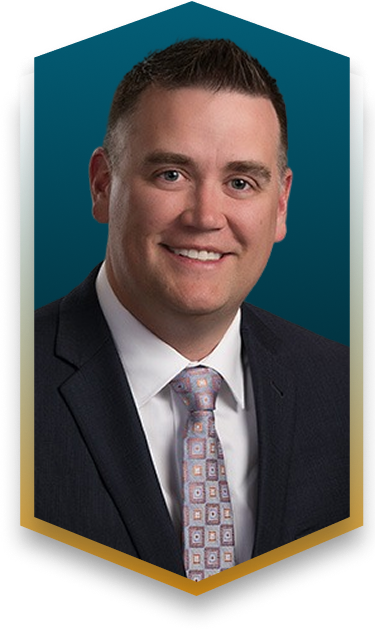
Cole Bingham is a co-founder and partner at Lance Bingham, where he represents injured Utahns and their families in cases involving vehicle crashes, bicycle accidents, dog bites, and wrongful death. Earlier in his career, Cole spent years representing insurance companies, and he now applies that insight to challenge insurers' tactics on behalf of injured clients. A graduate of the S.J. Quinney College of Law with High Honors, Cole has been named a Mountain States Super Lawyer and one of Utah Business's Legal Elite.
Lance Bingham Utah Personal Injury Lawyers
250 E 200 S #1050, Salt Lake City, UT 84111
Phone: (801) 383-2922

Schedule Your
Free Consultation