This page was written, edited, reviewed & approved by Dustin Lance and Cole Bingham following our comprehensive editorial guidelines. Dustin Lance, Partner Attorney, has handled many types of personal injury cases and is licensed in Utah and Idaho. Cole Bingham, Partner Attorney, focuses his practice on personal injury and wrongful death claims and is licensed in Utah. Before joining the firm, he spent years representing insurance companies, so he knows how insurers defend the claims our clients bring.
Key Takeaways
Filing a pedestrian accident lawsuit in Utah starts long before anyone drafts a complaint. Your personal injury protection benefits pay the earliest medical bills, and the driver's insurer begins building a fault argument while you are still in treatment. What happens during those first weeks shapes what a court can award later.
At Lance Bingham, we represent people who were hit while walking, and we never represent the drivers or insurers on the other side. State law sets deadlines and coverage rules that decide whether a claim ever reaches a courtroom.
Call 801-869-6800 to talk through where your claim stands right now.

Three rules control almost every pedestrian injury case here. Each one can end a claim before the facts are ever argued. Our team reviews all three before recommending litigation.
Utah Code Section 78B-2-307 allows an injured person four years from the date of the crash to bring a personal injury action. Courts dismiss late filings regardless of how clear the driver's fault was.
When a pedestrian dies from the collision, the timeline changes. Surviving family members have two years from the date of death to bring a wrongful death action under the state's limitations chapter.
Four years sounds generous, and that is the trap. Surveillance video gets overwritten, intersections are repaved, and witness memory fades within months of a collision. The deadline protects your filing right, not your evidence.
This is a no-fault state, which means your own policy pays first and your right to recover general damages from the driver is limited. General damages cover pain and suffering rather than out-of-pocket losses.
Section 31A-22-309 permits a claim for general damages only when the injured person has sustained one of the following:
Meeting any single category opens the door to a claim against the driver for losses your own coverage does not reach.
Consider a pedestrian who is struck in a parking lot and fractures a wrist. That person meets the threshold immediately, even if the emergency room bill lands under $3,000. Documentation of the fracture, rather than the size of the bill, is what opens the claim.
The state applies modified comparative fault. Under Section 78B-5-818, a person whose share of fault reaches 50% recovers nothing, and a smaller share reduces the award proportionally.
Insurers know this rule well. Adjusters routinely argue that a pedestrian stepped off a curb suddenly or crossed away from a marked crosswalk, because moving a few percentage points can erase an entire claim.
Coverage questions come before liability questions. Knowing which policy responds first keeps unpaid bills from going to collections while treatment is still ongoing.
Personal injury protection, usually shortened to PIP, is no-fault coverage that pays regardless of who caused the crash. Since May 2025, Section 31A-22-308 has expressly extended this coverage to a pedestrian injured in Utah by the insured vehicle.
Minimum benefits under Section 31A-22-307 include $3,000 in medical expenses and $1,500 toward funeral costs. Wage loss is paid at the lesser of $250 per week or 85% of gross income, for up to 52 weeks. These benefits run out quickly after a serious pedestrian collision.
Hit-and-run crashes and minimum-limits drivers are common in these cases. Uninsured motorist coverage on your own auto policy can respond even though you were on foot.
A pedestrian injured by an uninsured vehicle may also recover under one additional policy on which that person qualifies as a covered person. We identify every available layer of coverage before filing anything.
Most claims resolve without a courtroom, but the sequence below is what a contested case actually looks like. Each stage builds on the record created before it.
A pedestrian case generally moves through the following stages:
Skipping or delaying any stage hands the defense an argument it did not have to earn.
If you are unsure which stage your claim has reached, the team at Lance Bingham can review the crash report and your available coverage at no cost. Call 801-869-6800 to talk with us about your options.



Fault in pedestrian cases usually turns on right-of-way. Drivers and pedestrians both carry duties under the traffic code, and fault allocation follows those duties.
Section 41-6a-1002 requires a driver to yield by slowing or stopping for a pedestrian crossing within a crosswalk on the driver's half of the roadway. Between adjacent signalized intersections, a pedestrian may cross only at a marked crosswalk. Unmarked crosswalks also exist where sidewalks meet at an intersection.
Insurers still argue the absence of paint. Our team photographs sight lines and sidewalk alignment to show that a crossing was lawful.
Crossing outside a crosswalk does not end a claim. It shifts a percentage of fault, and the comparative fault rule described earlier decides what that shift costs you.
Adjusters tend to overstate that percentage. We measure the driver's speed, reaction time, and sight distance against the actual crossing to keep the allocation honest.
Where a sidewalk is available, pedestrians are required to use it, and where none exists, they must walk on the shoulder facing traffic. Drivers still owe a duty of care to people lawfully walking beside the road.
Rural highways and unlit shoulders produce some of the most serious injuries we see. Speed, headlight use, and driver attention become central issues in those cases.
Some pedestrian collisions involve a government driver, a transit bus, or a dangerous roadway condition. Those claims follow a much shorter timetable.
The Governmental Immunity Act requires a written notice of claim within one year after the claim arises, followed by a 60-day waiting period before filing. The lawsuit itself must begin within two years. Missing the notice deadline bars the claim outright.
That one-year window can close while the ordinary four-year deadline is still open. Any collision involving a city vehicle, a marked bus, or a malfunctioning signal deserves an early review for this reason.
Filing begins a structured process governed by the Rules of Civil Procedure. Deadlines start running automatically once the defendant appears.
Each case is assigned a discovery tier based on the damages pleaded. Rule 26(c) sets standard discovery at Tier 1 for $50,000 or less, Tier 2 above $50,000 and below $300,000, and Tier 3 for $300,000 or more.
The tier controls deposition hours, written discovery, and the length of the discovery period. Pleading a lower tier waives the right to recover above that limit, so the damages assessment has to be right at filing.
Rule 26.2 requires an injured person to disclose medical records, treating providers, and related information in personal injury actions. At Lance Bingham, we prepare those disclosures alongside the complaint rather than scrambling after service.
Incomplete disclosures invite motions and delay. A clean production early also signals to the defense that the medical record will hold up under scrutiny.
Most pedestrian cases resolve during discovery or at mediation, once the medical picture is complete. If the insurer will not offer a reasonable figure, a jury decides fault percentages and damages.
Timing matters more than most people expect. Settling before treating doctors can say whether an impairment is permanent often locks in a number that ignores the cost of future care.
Damages fall into two categories, and both require documentation.
Economic damages cover measurable financial losses:
Non-economic damages cover the human consequences of the collision:
Both categories are reduced by any percentage of fault assigned to the injured person.
Documentation drives both columns. We collect billing records, employer wage statements, and treating provider opinions so that every figure traces back to a source the defense cannot easily dispute.
Yes. Crossing outside a crosswalk shifts fault rather than eliminating your claim, as long as your share stays below 50%.
You may still qualify if you sustained a bone fracture, permanent impairment, or permanent disfigurement. We review your records against every threshold category in the statute.
Yes. State law extends personal injury protection to pedestrians struck by an insured vehicle, and your uninsured motorist coverage may also apply.
You must file a written notice of claim within one year of the crash. The lawsuit itself must begin within two years.
Uninsured motorist coverage generally applies to hit-and-run collisions. We work through law enforcement records and nearby video to identify the vehicle when possible.
If a driver hit you while you were walking, the coverage and deadline questions above are already running against you. Our Salt Lake City team handles pedestrian claims from the first PIP submission through trial when an insurer refuses to pay fairly.
Dustin Lance and Cole Bingham represent injured people only, never the drivers or insurance companies on the other side. We evaluate liability, available coverage, and the threshold categories your injuries may satisfy. Our firm works on a contingency fee basis.
Every pedestrian case we take begins with a free case evaluation and an honest assessment of what the evidence supports. Call 801-869-6800 to talk with our team about filing a pedestrian accident lawsuit.
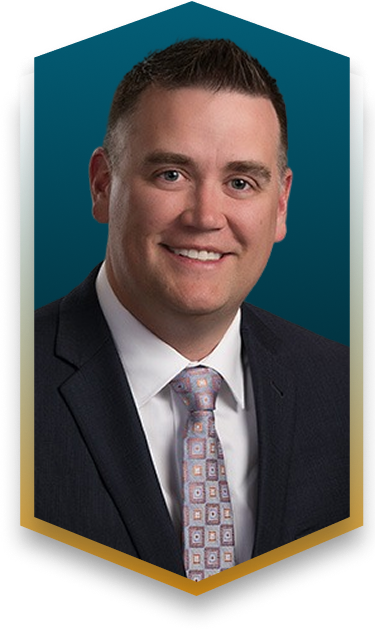
Cole Bingham is a co-founder and partner at Lance Bingham, where he represents injured Utahns and their families in cases involving vehicle crashes, bicycle accidents, dog bites, and wrongful death. Earlier in his career, Cole spent years representing insurance companies, and he now applies that insight to challenge insurers' tactics on behalf of injured clients. A graduate of the S.J. Quinney College of Law with High Honors, Cole has been named a Mountain States Super Lawyer and one of Utah Business's Legal Elite.
Lance Bingham Utah Personal Injury Lawyers
15 West South Temple, Suite 1650, Salt Lake City, UT 84101
Phone: (801) 383-2922

Schedule Your
Free Consultation