This page was written, edited, reviewed & approved by Dustin Lance and Cole Bingham following our comprehensive editorial guidelines. Dustin Lance, Partner Attorney, has handled many types of personal injury cases and is licensed in Utah and Idaho. Cole Bingham, Partner Attorney, focuses his practice on personal injury and wrongful death claims and is licensed in Utah. Before joining the firm, he spent years representing insurance companies, so he knows how insurers defend the claims our clients bring.
Key Takeaways:
Yes, you can sue in Utah even if you were not wearing a seat belt when the crash happened. State law goes further than most places and keeps the question out of the case entirely, which means the driver who hit you cannot raise it and a jury will never hear it. That may be hard to believe if an adjuster has already asked whether you were buckled, because those questions are built to make you feel responsible for injuries someone else caused.
Lance Bingham Utah Personal Injury Lawyers handles car accident claims across the state, and we have seen how often the seat belt question softens people up before a low offer arrives. If an adjuster keeps circling back to it, call us at (801) 869-6800, and we will tell you where you stand.

The rule sits in Section 41-6a-1806 of the Utah Code, and it does two separate things. Failing to use a child restraint device or wear a safety belt does not constitute contributory or comparative negligence on the part of a person seeking recovery. It also may not be introduced as evidence in any civil litigation on negligence, injuries, or the mitigation of damages.
That second part matters more than people expect. An insurance company cannot tell a jury you were unbuckled, cannot argue that your broken ribs would have been bruises instead, and cannot ask for a reduction on that basis.
The practical effect shows up more often in settlement talks than in courtrooms. An adjuster who knows the argument would never reach a jury has little reason to keep pressing it, which is why a clear citation early in the claim usually ends the discussion.
In states that allow it, the seat belt defense is an argument that the injured person made their own injuries worse by going unbuckled. The at-fault driver admits causing the crash, then asks the jury to cut the damages anyway. Our statute forecloses that argument on every issue it covers: negligence, injuries, and mitigation of damages.
Drivers and passengers must buckle up under the seat belt requirement. A violation is an infraction with a maximum fine of $45, and the penalty statute bars license points. That citation stops at the traffic court door, and it does not follow you into your injury claim.
Drivers here should not take this protection for granted. Senate Bill 74 arrived in the 2026 general session under the title Seat Belt Civil Action Amendments. It would have flipped both halves of the statute so that going unbuckled could count as comparative negligence and reach the jury.
Had it passed, unbuckled claims would have carried a built-in defense argument for the first time since 1986.
That is not what happened. The seat belt language was stripped out at the second substitute, and the version that moved forward addresses only policy-limit demand letters sent to insurance carriers. Section 41-6a-1806 came through the session unchanged.
Similar bills failed in 2014 and 2017, and repeal attempts go back further than that. For a crash like this year's, the answer is the same one it has been for two decades.
The seat belt is a distraction. The real gate is the no-fault system, and it stops far more claims than restraint use ever could.
Every auto policy in this state carries personal injury protection, often shortened to PIP. The benefits statute sets a minimum of $3,000 in medical coverage, along with a household allowance of $20 per day. Wage loss runs at the lesser of $250 per week or 85% of gross income, for up to 52 weeks.
Those benefits pay regardless of who caused the crash, and they pay whether or not you were buckled.
Stepping outside that system to bring a claim against the at-fault driver for general damages takes more. The threshold statute allows it only where the injured person sustained one of several qualifying conditions:
Two of those conditions turn on medical proof rather than dollar totals. Permanent impairment based on objective findings points to imaging, test results, or clinical measurements, not a description of how you feel on a difficult day. That distinction decides a surprising number of claims where the medical bills land just under the line.
Meeting any one of them opens the door to the full range of damages in a car accident case, including pain and suffering that personal injury protection never covers. The $3,000 figure sounds low until you see how quickly one emergency room visit clears it. Because the first benefits come from your own policy, it's worth understanding how no-fault and at-fault coverage work together early.
None of this means fault is off the table. We work under modified comparative fault, set out in the comparative fault statute, so a person whose share of fault reaches 50% recovers nothing, and any share below that reduces the award in proportion.
Say a jury values a case at $200,000 and assigns the injured driver 20% of the fault for entering an intersection late. The award drops to $160,000.
What a jury cannot do is put any part of that 20% on the seat belt. Fault has to come from conduct that helped cause the collision, such as speed, distraction, or a missed signal. Restraint use is not part of that math, and what negligence means in an injury claim is a useful reference point when an adjuster blurs the two.
A rule of evidence does not stop a phone call. Adjusters bring up the seat belt during the claim stage, long before any judge is involved, and the pressure works because most people have never heard of the statute. The approaches follow a few familiar patterns:
Timing is part of it. These questions tend to arrive in the first week or two, while you are still sorting out treatment and transportation and have no particular reason to know what the evidence rules say.
Each one leans on the same mistaken premise, and each one deserves a short answer citing the law. At Lance Bingham, we give that answer once and move the conversation back to the driver who caused the crash.
The medical records deserve particular attention. Providers chart restraint use as routine, and an insurer will sometimes treat that notation as an admission. Working with a Utah car accident lawyer early keeps those notes in context.
You do not have to argue any of this on your own. Call (801) 869-6800 and we will deal with the adjuster while you focus on treatment.
Not lawfully. Section 41-6a-1806 keeps restraint use out of the negligence, injury, and mitigation analysis, so a reduction on that basis has no legal footing.
No. The citation is an infraction with a maximum fine of $45 and no license points, and you cannot introduce it in your civil case.
The same protection applies. The statute covers passengers bringing claims, whether the claim runs against the driver who caused the crash or the one they rode with.
No. Personal injury protection pays regardless of fault or restraint use, up to the limits written into your policy.
The statute names child restraint devices alongside safety belts, so the same evidentiary bar applies. A separate citation for the driver is still possible.
Most personal injury actions carry a four-year deadline under the filing statute. Waiting costs you evidence long before it costs you the right to file.
The question of whether you were buckled has probably been sitting with you since the crash, and it may be the one thing you can stop carrying.
Lance Bingham Utah Personal Injury Lawyers brings nearly 40 years of combined experience to car accident claims statewide. Our attorneys handle their own files instead of passing them to claim handlers, and we travel to injured people anywhere in Utah rather than asking them to come to us.
Dustin Lance and Cole Bingham will look at the collision itself, the medical picture, and whether you can sue the at-fault driver under the no-fault threshold. We work on a contingency fee basis, so having that conversation costs you nothing upfront.
Call (801) 869-6800 for a free case evaluation, or reach us through our contact page, and let us take the seat belt question off your list.
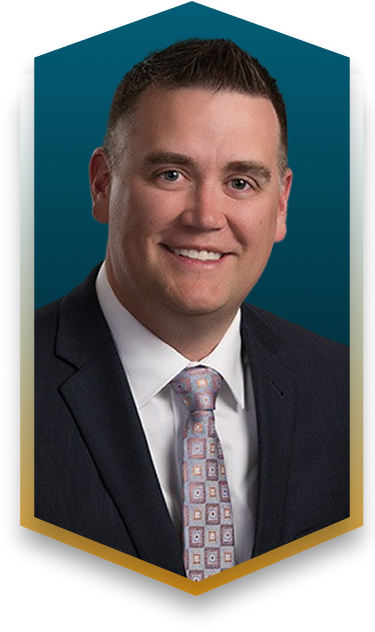
Cole Bingham is a co-founder and partner at Lance Bingham, where he represents injured Utahns and their families in cases involving vehicle crashes, bicycle accidents, dog bites, and wrongful death. Earlier in his career, Cole spent years representing insurance companies, and he now applies that insight to challenge insurers' tactics on behalf of injured clients. A graduate of the S.J. Quinney College of Law with High Honors, Cole has been named a Mountain States Super Lawyer and one of Utah Business's Legal Elite.
Lance Bingham Utah Personal Injury Lawyers
250 E 200 S #1050, Salt Lake City, UT 84111
Phone: (801) 383-2922

Schedule Your
Free Consultation